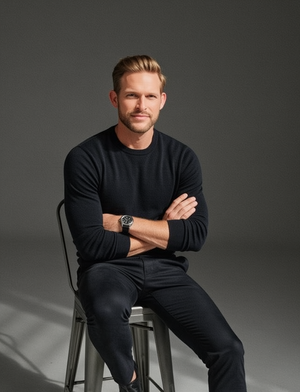
the boy in the photograph
Sometimes I look at old photographs of myself and feel like I’m looking at a murder victim.
.
I know how dramatic that sounds.
Maybe that’s why the thought stayed in my head for so long before I allowed myself to say it aloud.
.
There are photographs where I recognize the place. I recognize the clothes. I remember the people standing just outside the frame. I know, intellectually, that the person looking back at me is me.
.
But sometimes I don’t know him.
.
Or maybe that’s not quite right… sometimes I know him too well.
.
I know things he doesn’t know yet.
.
I know which parts of him will become dangerous to reveal. I know which things he’ll learn to hide. I know how good he’ll eventually become at reading a room before deciding how much of himself is safe to bring into it.
.
I know how quiet he’s going to become.
.
And there is something profoundly strange about looking into the eyes o someone who doesn’t know what you know about his life.
.
For years, I think I approached those photographs almost like evidence. If I looked long enough, maybe I could find the moment everything changed. Maybe there would be something in his expression. A clue. A before and an after. Something I could point to and say, “There. That’s where he disappeared.”
.
Trauma does strange things to memory. There are things I remember with extraordinary clarity — the kind of clarity where I can still feel the temperature of the room — and other things that seem to exist only in fragments. Images without context. Feelings without dates. Reactions whose origins I can understand intellectually but can’t necessarily trace backward in a straight line.
.
So I kept going back. Turning things over. Replaying conversations. Reconstructing moments. Trying to understand whether the person I became was always going to be this person, or whether somewhere along the way survival quietly took the pen and started writing for me.
.
That is where my favorite line in the boy in the photograph came from:
.
“I kept interrogating memory.
Memory never confessed.”
.
Of everything I’ve written in the song, those may be the words that feel most true.
.
Because I have interrogated memory.
.
I’ve put it under the brightest light I could find and asked it the same questions in a hundred different ways.
.
When did this start?
Why do I do this?
Why do I go quiet?
Why does my mind prepare for conversations that haven’t happened yet?
Why can twenty possible endings occur inside me while everyone else thinks we’re having only one conversation?
Why do I sometimes feel safer disappearing inside myself than risking being misunderstood outside of it?
.
Memory has offered evidence. It has offered possibilities. It has offered enough fragments for therapy and time and age to help me understand things I couldn’t understand when I was younger.
.
But it has never confessed.
.
There was never one moment when everything suddenly made sense.
.
And maybe that was the mistake..
.
I thought healing meant solving the case. I thought if I understood enough about what happened to me, eventually I could draw a clean line from that boy to this man and explain every decision, every relationship, every coping mechanism, every silence along the way.
.
But human beings aren’t equations.
.
There isn’t always an answer at the bottom of the page… sometimes, there is only understanding. And compassion. Those have been harder for me.
.
Understanding why I became certain things is relatively easy. Having compassion for the person who needed to become them is something else entirely.
.
For much of my life, I was enormously proud of my independence. My ability to handle things. My ability to keep going when things became difficult. My ability to walk into chaos and somehow figure out what needed to happen next.
.
People could depend on me. I could depend on me. There is nothing inherently wrong with any of those things. But OI’m beginning to understand that some of the qualities I thought were simply me may also have been extraordinary sophisticated ways of staying safe.
.
The world thought I grew up. The truth is, in some ways, I just grew quiet.
.
I learned how to function. I learned how to smile. I learned how to make people laugh. I learned how to succeed. I learned how to be the person who could carry more. And because I was so good at carrying it, very few people ever thought to ask how heavy it was.
.
For a long time, neither did I.
.
That’s part of why I didn’t want this song to be another quiet piano ballad. Quiet would have been beautiful. It also would have been wrong. My mind isn’t quiet when I look backward. It searches. It argues. It reconstructs. It finds something and immediately finds evidence against it. It opens one door and discovers six more behind it.
.
So the boy in the photograph became stranger musically than much of what I’ve been writing lately. Harder. More experimental. At times intentionally unsettled.
..
I wanted the music to sound a little like memory feels to me. Not chronological. Not obedient. Not particularly interested in resolving itself just because I would like it to.
.
And somewhere in writing the song, something happened that I hadn’t planned.
.
The metaphor changed.
.
I had begun with a murder victim. That meant I had spent all this time searching for a death. Trying to determine when that boy disappeared. Trying to understand what killed him. Except eventually I had to confront a possibility I hadn’t considered.
.
What if nobody killed him? What if he never disappeared? What if all those things I had interpreted as evidence of his absence were actually evidence of how desperately he had fought to remain?
.
Maybe the silence wasn’t his grave. Maybe it was his hiding place. Maybe the independence wasn’t proof that he stopped needing anyone. Maybe it was how he made certain he could survive if nobody came. Maybe all those versions of me I’ve spent years examining weren’t the people who replaced him. Maybe they were the people he created to keep himself alive.
.
And suddenly I wasn’t looking at a murder victim anymore. I was looking at a boy who had been waiting an extraordinarily long time for someone to recognize him.
.
The detective in me still wants answers. I suspect he always will.
.
There are questions about my life that memory will probably never answer to my satisfaction.
.
There are things trauma changed that healing cannot go backward and undo
.
There are versions of my life I will never know. I’ve grieved some of them. I probably haven’t finished grieving all of them.
.
But I don’t look at the photograph quite the same way anymore because perhaps healing was never supposed to bring the person I would have been if nothing had happened. Perhaps that is another imaginary person I’ve been mourning
.
The boy who actually existed did something much more remarkable.
.
He stayed. Quiet. Imperfectly. Sometimes destructively. Sometimes brilliantly. He adapted. He hid. He became whatever he thought he needed to become. And he waited.
.
I thought I had spent all these years investigating his death. It took me a long time to understand that I was witnessing his return.
.
And now I find myself wondering about something I never thought to ask before.
.
Not what happened to him. Not who he might have become. Not even what was taken from him…
.
I wonder what happens next.
.
Because maybe finding the boy in the photograph isn’t the end of the investigation.
.
Maybe it’s the first time in his life that nobody else gets to decide who he becomes.